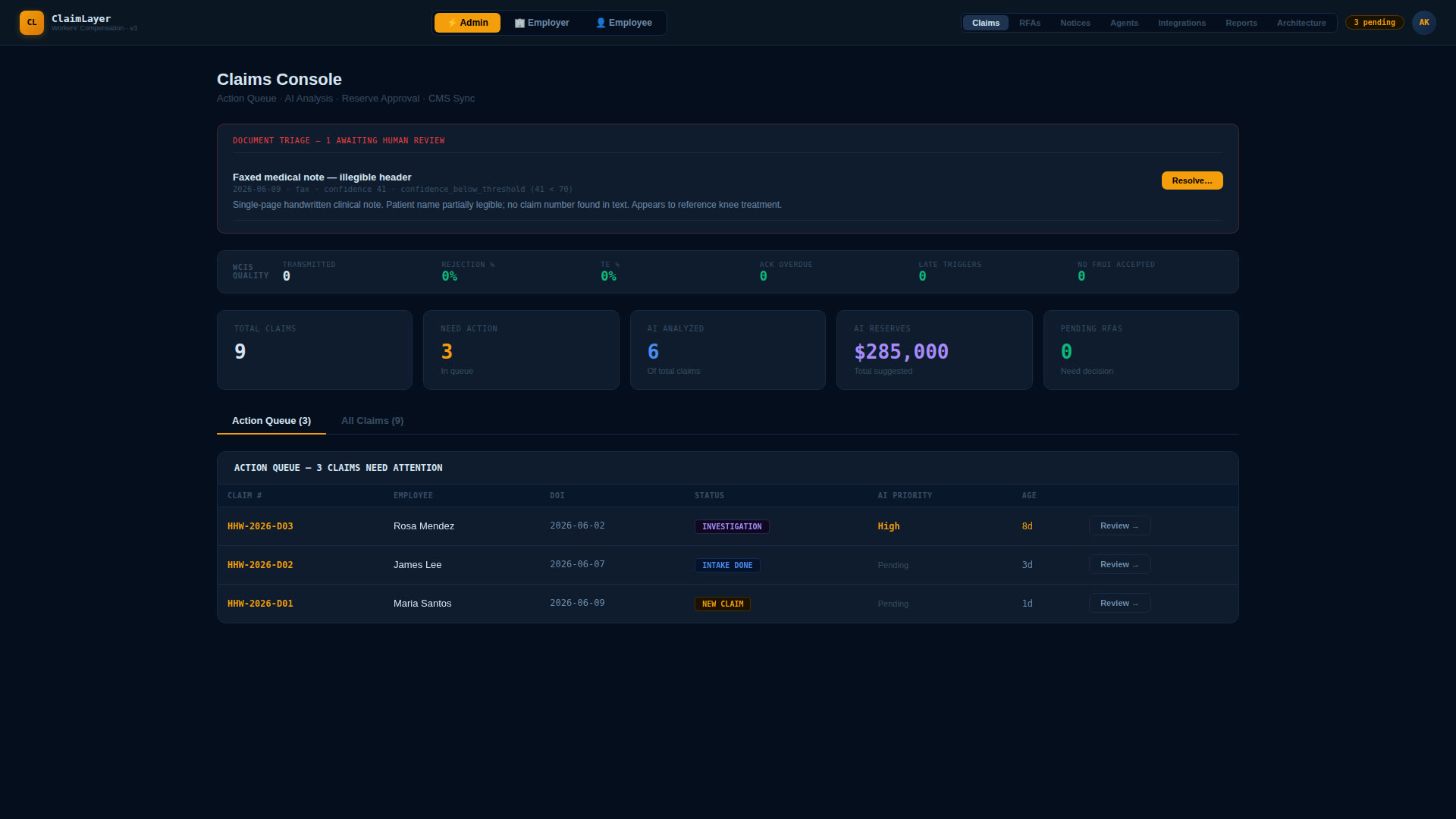
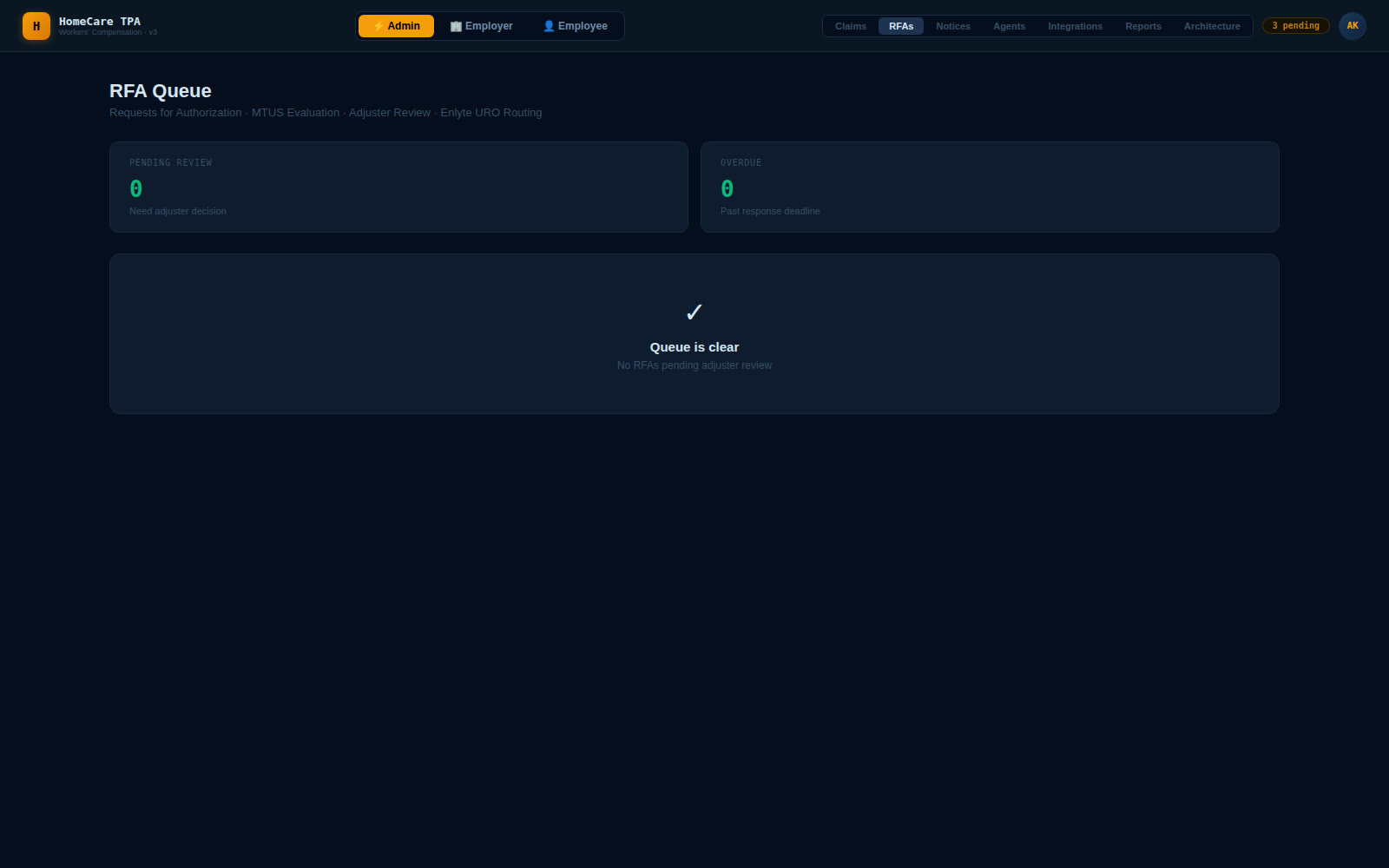
Works the queue — the AI handles everything after
- Incoming documents — uploaded PDFs, scanned faxes, email attachments — are ingested, summarized, and reviewed in the context of the claim; the actions they require, reserve adjustments included, surface on the queue
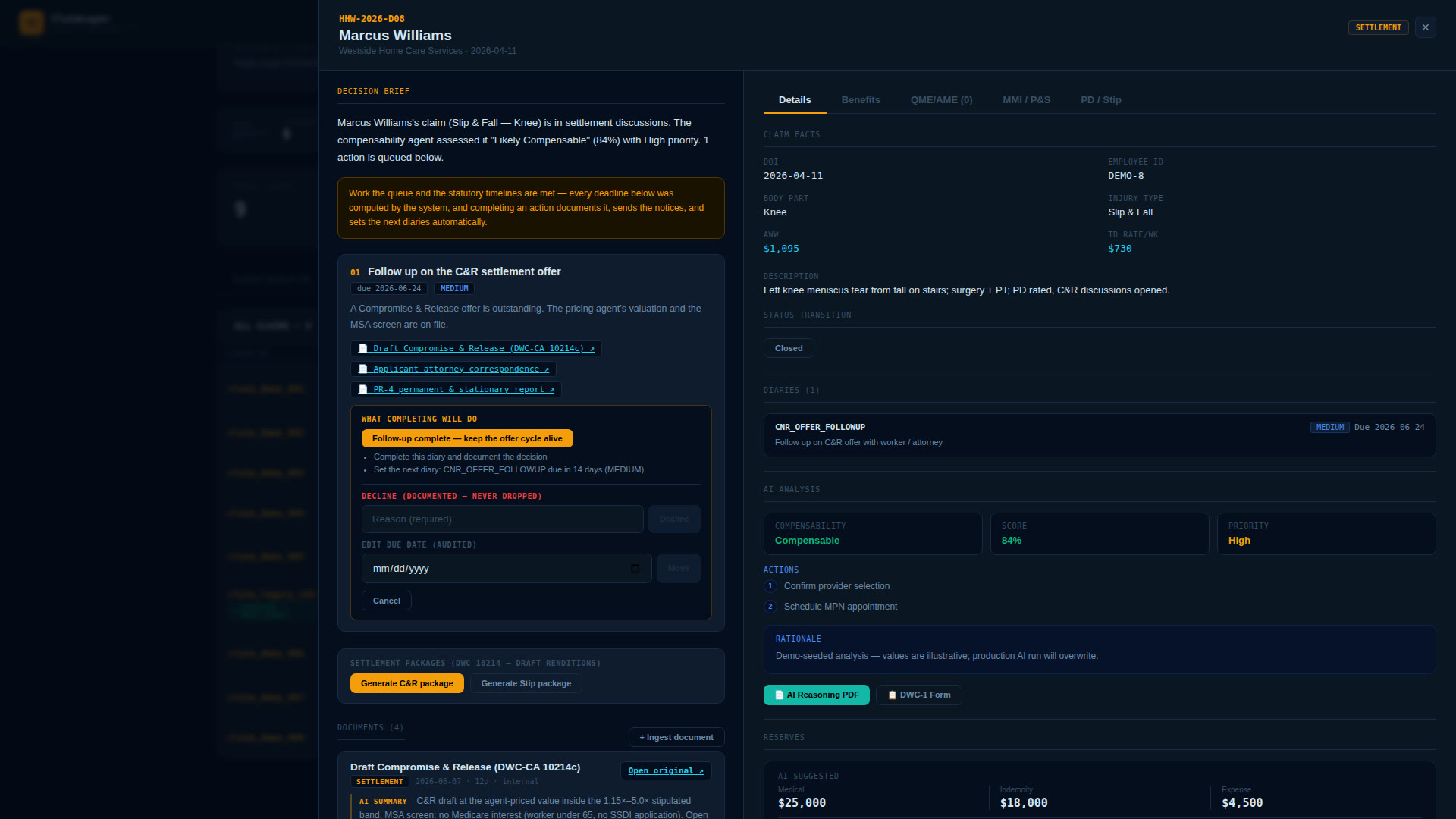
- Each item opens as a plain-language brief: what to decide, why, what in the claim led here — everything relevant presented, summarized, and organized, with the originals one click away
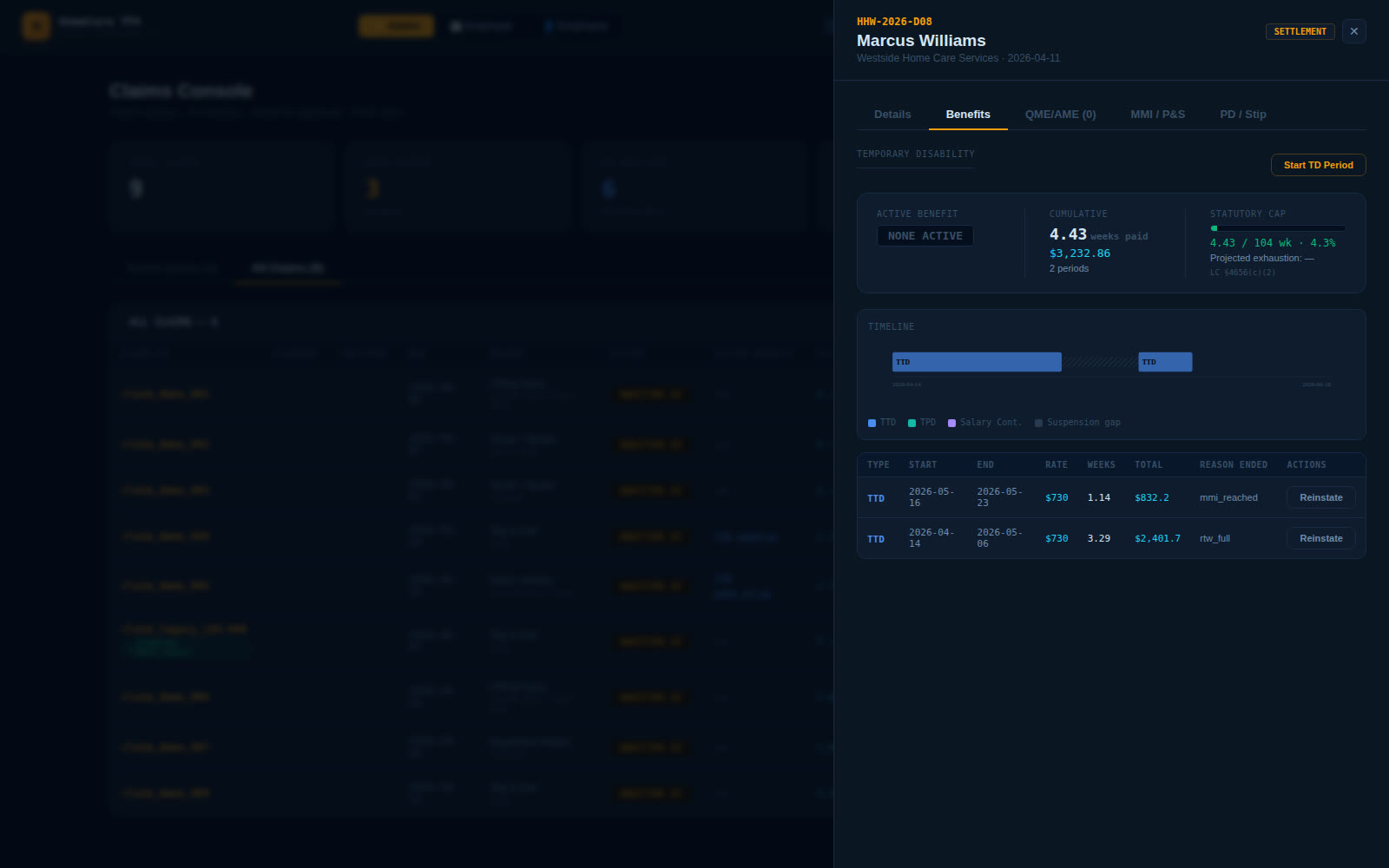
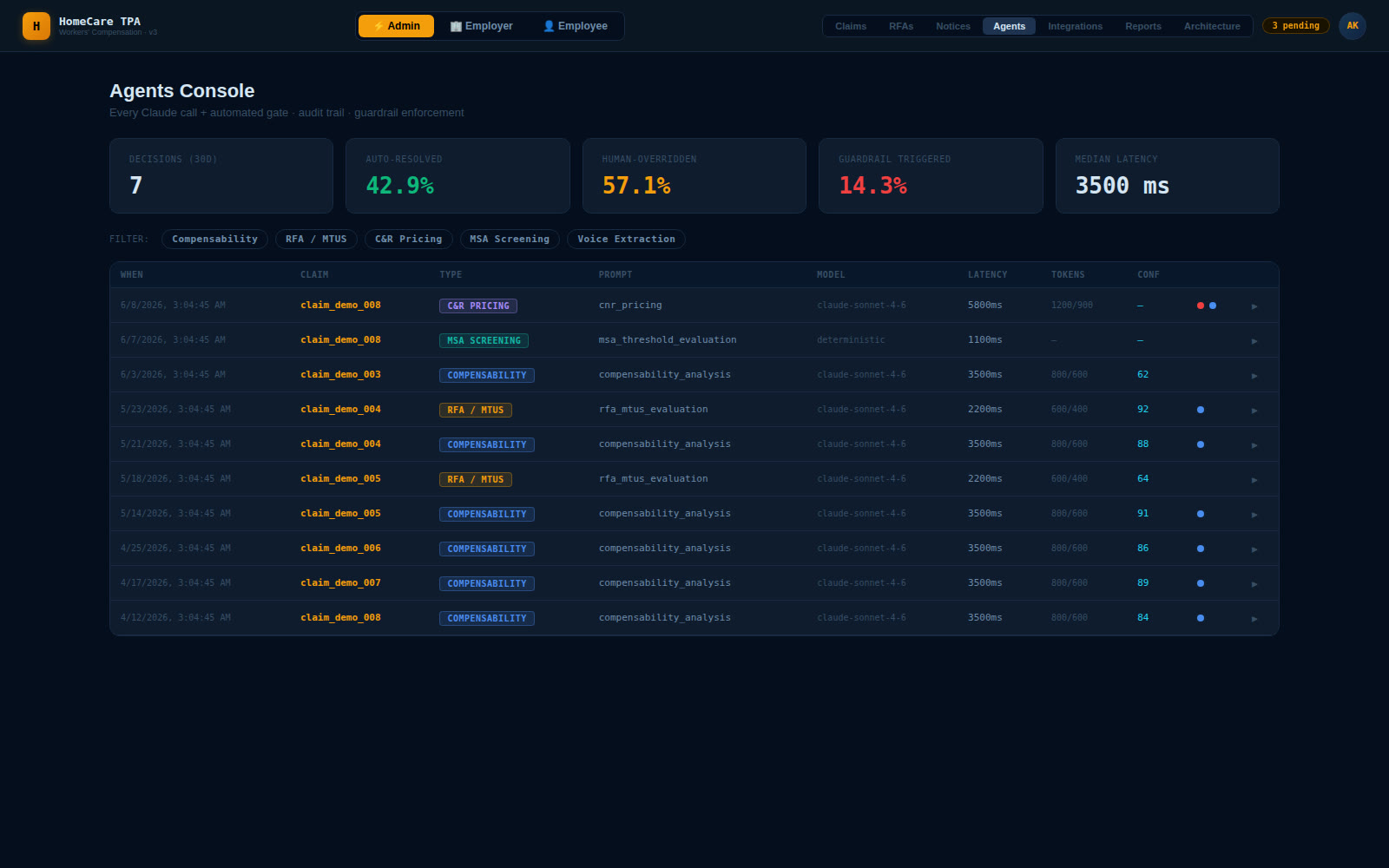
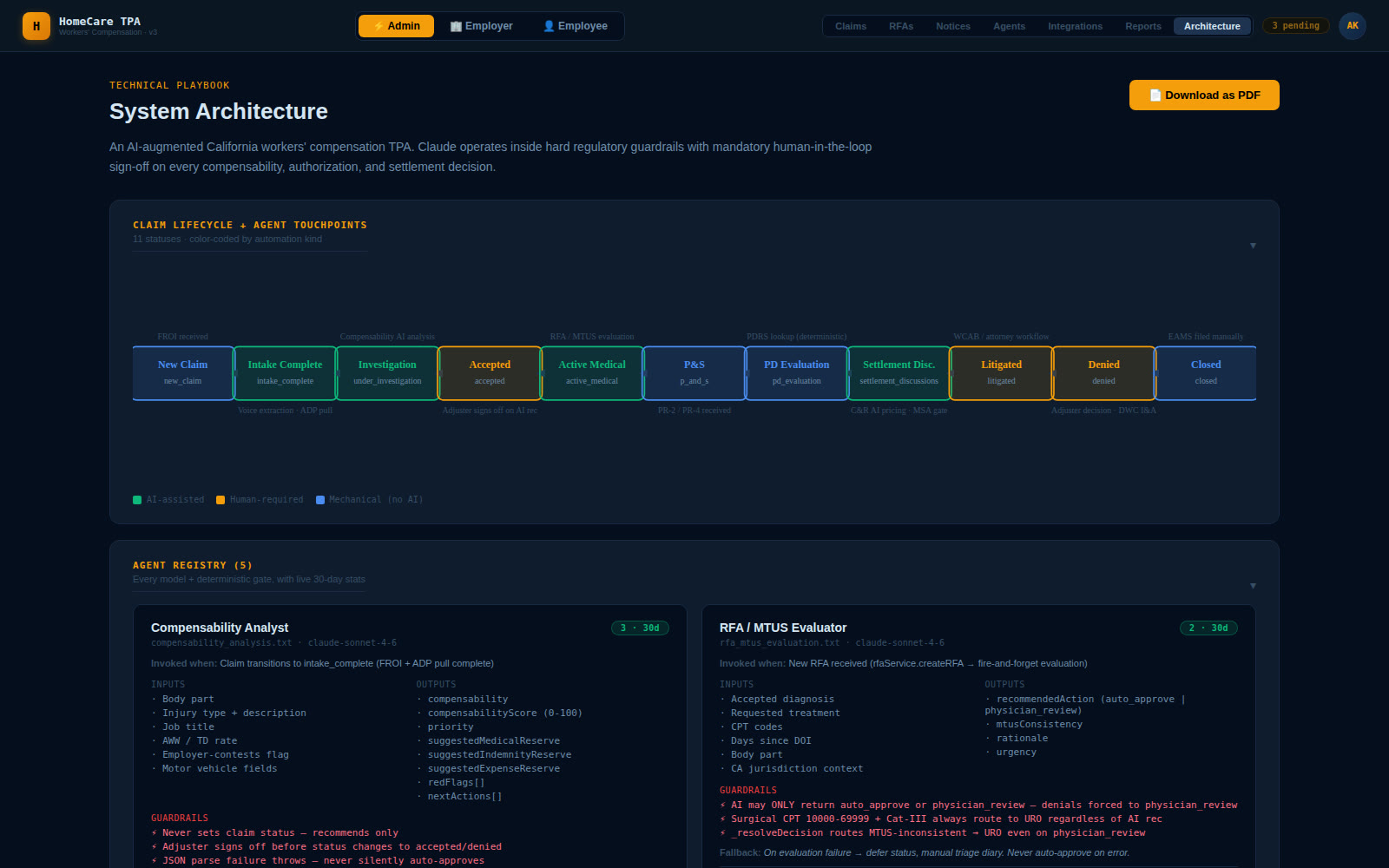
- After the decision, the AI does the follow-up: documents it, sends the letters and notices, completes the diary, sets the next ones, builds and queues the FROI/SROI state-report transactions — all of it logged and auditable
- What's left for the human is exactly what should be: the impactful decisions, and taking care of the people on the claim
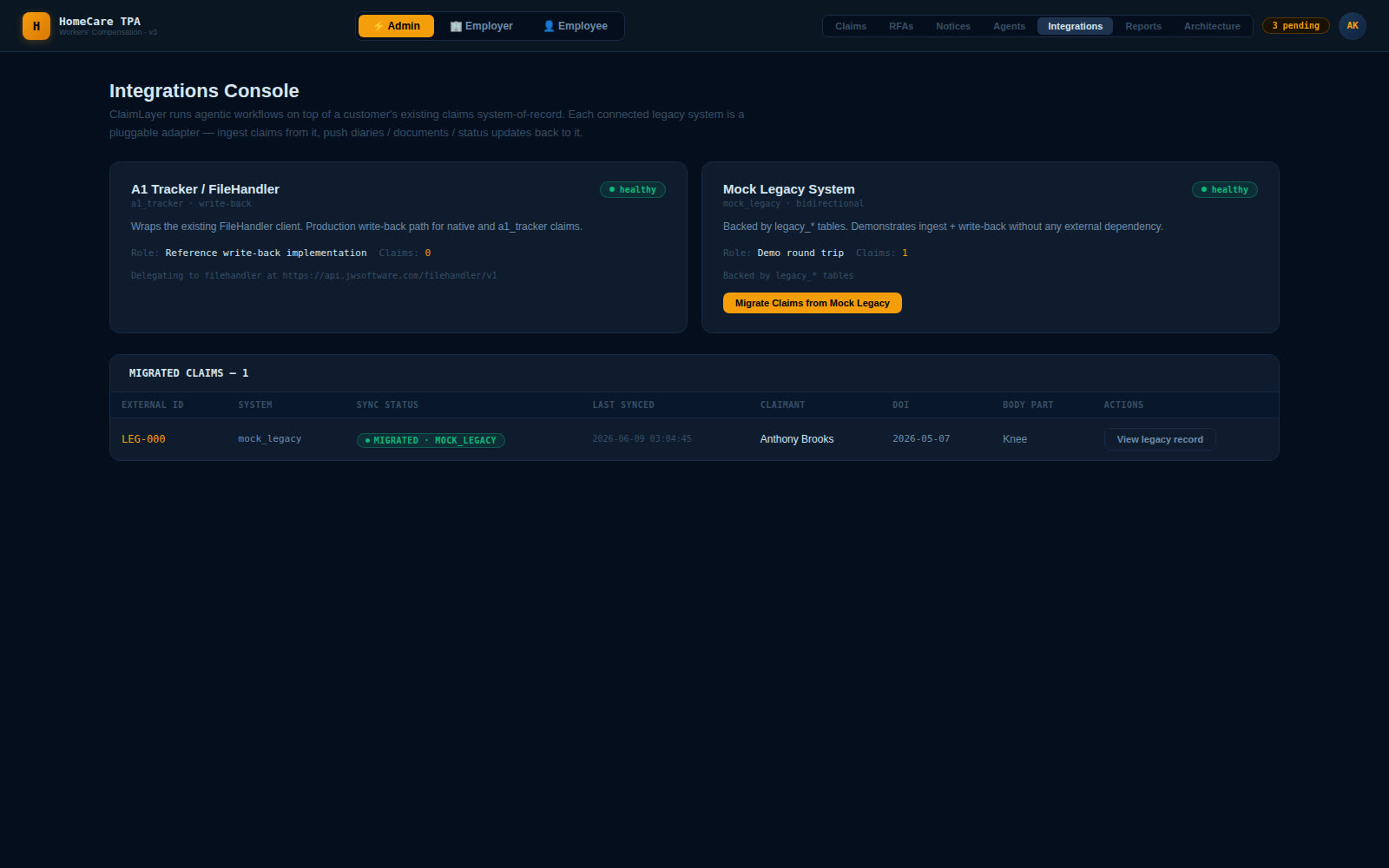
vs. the usual claims systemLegacy systems are passive ledgers: the adjuster reads raw PDFs, recalls the code section, drafts each notice, calendars deadlines, and keys state reports by hand. Here the contract is simple — work the queue and the deadlines are computed, the notices drafted, the state-reporting transactions built, queued, and reconciled.